
All you need to know about python 3 and python 2 before you choose one of them.
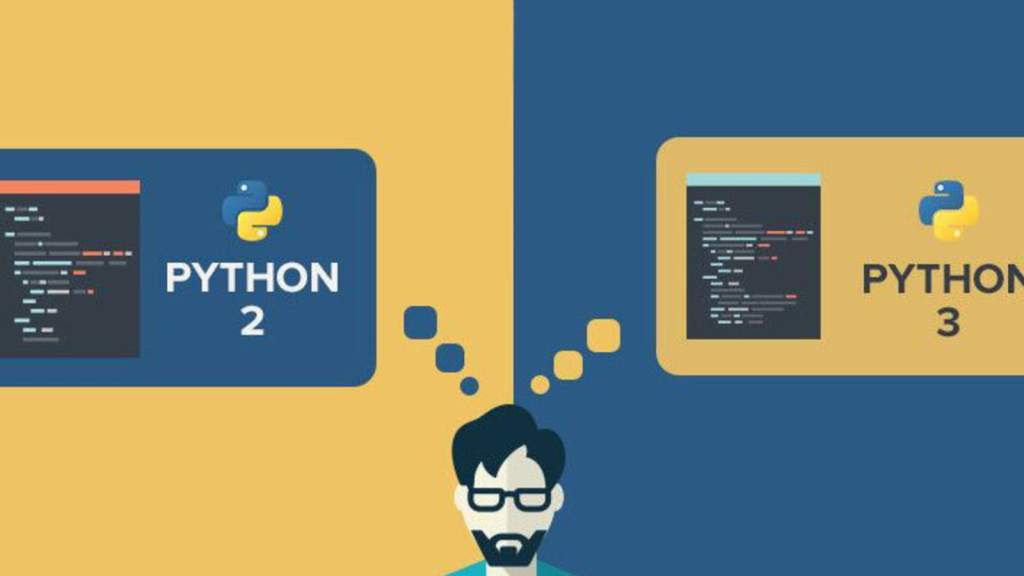
HELLO WORLD
Python 2 –> print “Hello World”
Python 3 —> print(“Hello World”)
HISTORY OF PYTHON
- Python 2.0 – October 16, 2000
- Python 2.1 – April 17, 2001
- Python 2.2 – December 21, 2001
- Python 2.3 – July 29, 2003
- Python 2.4 – November 30, 2004
- Python 2.5 – September 19, 2006
- Python 2.6 – October 1, 2008
- Python 2.7 – July 3, 2010
- Python 3.0 – December 3, 2008
- Python 3.1 – June 27, 2009
- Python 3.2 – February 20, 2011
- Python 3.3 – September 29, 2012
- Python 3.4 – March 16, 2014
- Python 3.5 – September 13, 2015
- Python 3.6 – October 2016
- Python 3.7 – June 2018
KEY DIFFERENCES:
| COMPARISON | PYTHON 3 | PYTHON 2 |
| Release Date | 2008 | 2000 |
| Function print | print(“hello”) | print “hello” |
| Syntax | simpler | Difficult |
| Iteration | range() | xrange() |
| Exceptions | Enclosed in parenthesis | notations |
| Division of Integers | Results float value | Integer value |
BUT WHAT SHOULD I CHOOSE?
When it comes to Python version 2 vs. today, Python 3 is the outright winner. That’s because Python 2 won’t be available after 2020.
Mass Python 3 adoption is the clear direction of the future. After considering declining support for Python 2 programming language and added benefits from upgrades to Python 3, it is always advisable for a new developer to select Python version 3. However, if a job demands Python 2 capabilities, that would be an only compelling reason to use this version.
 TECHIE'S SCRIBBLING